By Juliet Lodge**
Despondency deepened as I left northern England at 5.30 am heading for London hours after the referendum result was announced and snatched our EU citizenship. London was strangely subdued and embarrassed. Dismayed colleagues from around the world hugged us Brits through a veil of tears. Brits? That sense of identity had vanished long ago. Therein lies a paradox of the referendum narrative. It wasn’t about identity, belonging or Europe. It was about denial, delusion and deception. Denial of the joys and benefits of the EU; delusion over existence outside it; and deception of voters as to the facts.
British referendums are advisory. A leader could decide to interpret a slender outcome (as in this case) as reason to question his own and his party’s ruling position and call a general election before doing anything else. And before taking drastic steps that shake the world’s economy, and the stability of his own state and the EU. In 1975, a mere three years after joining the EEC, that was a real prospect. 40 years later, why must Conservatives in either Remain or Leave camps clinging onto power at any price trump our obligation towards the rest of the world? That is the question. A pox on both your houses was the answer.
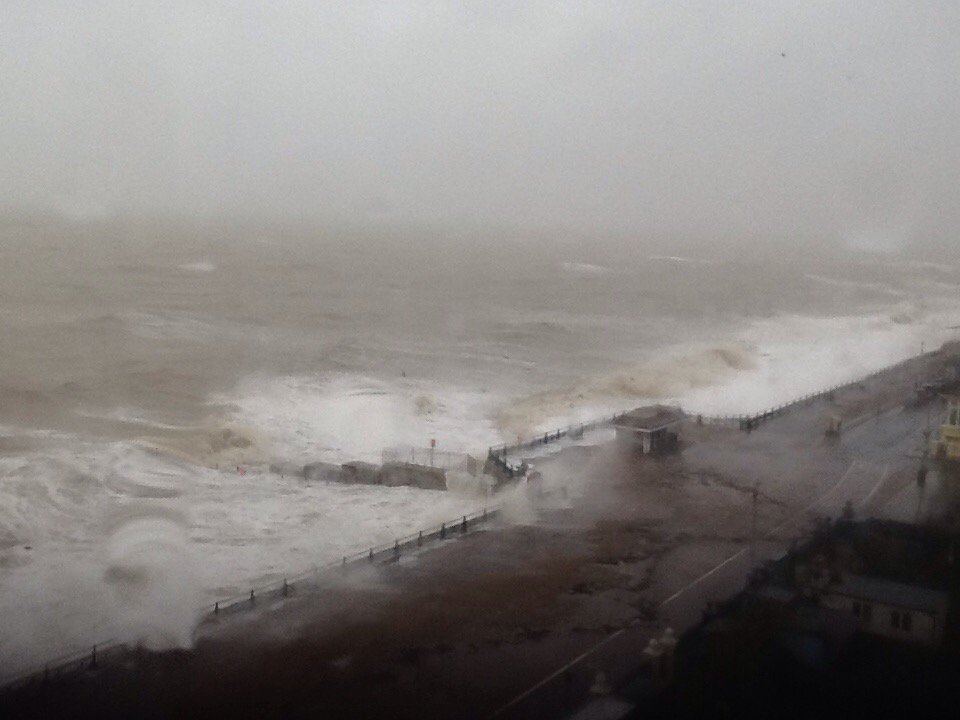
‘Stormy Seas’ ©Juliet Lodge
The British generally like Europe and welcome EU partners far more than politicians and especially the media care to admit. Our ubiquitous European culture is everywhere but strangely dissociated from things EU. Communicating Europe was drowned out by torrid duplicity ( eg Leave castigating Remain as ‘project fear’), internal Conservative personality politics and raw ambition (eg blue-on-blue mud-slinging and silly stunts).
For many, Prime Minister Cameron’s decision to call a referendum was both unnecessary and potentially an irresponsible and shameful way to try to seal internecine strife over Europe among Conservatives dating back to the end of World War II. Close on 50 years of a European history of peace, constructive cooperation, integration and the prospect of contributing to the EU’s future were abandoned to soundbites exploiting parochialism, ignorance, fear, nationalism and trivialisation of politics of the worst sort.
Disinformation about migration (that conduit for frustration over unfair distribution of scarce resources) was cynically manipulated especially by right-wingers. The media reiterated it plus implausible figures about the cost of EU membership and claims. The narrative lacked meaning for the average person : free trade, financial markets, cross border research, freedom of movement, regulations and directives, transparency, democracy and globalisation dissolved into blah blah. Leave’s glib misrepresentations of EU democracy went largely unchallenged. TV ‘debates’ were inaudible and rarely informative.
This was not a referendum about the EU or the UK’s place in it. The Leave and Remain campaigns were old-fashioned, uninspiring, generally ignored women and deprived the younger generation of a voice. Worse still, they denied the young the opportunity to share with their EU peers the joys and exasperation of understanding and shaping, a la Jean Monnet, Europe’s future.
A referendum reflecting the narratives of an over-30 aging, male-oriented Establishment was bound to end badly. And it did.
On June 24, there was no escaping the message of angry voters at mounting austerity and the Establishment’s apparent disregard for the average person outside affluent pockets in London and the Southeast. The indirect targets were the political class, bankers, corporations – those elites seen as culpable but untouched by the recession hitting us all in Europe. Advice from experts, international organisations, scientists, sportspeople, unions, artists, foreign leaders, presidents and politicians to stay in the EU were disregarded even as public thirst for reliable facts from credible, trustworthy sources became more voluble.
Two areas reflect what happened across the country: Kingston-upon-Thames (in Surrey, on the edge of London, affluent, well-educated, with among the highest turnout and highest proportion of Remain voters) and Kingston upon Hull (one of the UK’s biggest ports, host to Siemens wind energy construction and associated industries, with high unemployment, low educational levels and low incomes with one of the lowest turnouts and highest proportion of Leave voters). The more deprived an area, the higher the Brexit vote. Waning Scottish enthusiasm for the EU was no match for that.
The Leave campaign exploited and engineered visible faces of discontent: ‘migration’ (from anywhere but notably EU) and ‘sovereignty’ (misrepresented as the return to local decisionmaking power and denial of globalisation’s truths). The Remain campaign seemed framed by a male-dominated, relatively affluent, out of touch world-view. The muzzled Labour party struggled with leader Corbyn’s Eurosceptic image: his weak endorsement of Remain contrasting badly with Scottish Conservative newcomer Ruth Davidson’s robust TV arguments. His sacking of pro-EU critic Hilary Benn hours after EU Commissioner Faull resigned adds fuel to a circus of headless chickens.
Throughout, we have felt the absence of the strong media presence and reasoned pro-EU voices of EU Liberals like the late Charles Kennedy and Baroness Shirley Williams. They had worked with the cross party Britain in Europe campaign in Prime Minister Tony Blair’s time to support Maastricht and the Single Market. Pro-EU former Green party leader and former MEP Caroline Lucas too often seemed to be a token female voice of informed reason answering the question ‘to be or not to be’.
Unlike those cross-party efforts that put the country ahead of party, the European narrative was weak and rarely visible. No European culture, no celebration of Europe’s postwar achievements and history. Remain MEPs seldom got as much media airtime as Brexiteers.
From the start, anyone venturing outside Westminster’s village could taste the deep public disenchantment in densely populated England where the referendum would be lost.
Just over 24 hours after the result, an online petition on parliament’s website favouring a second referendum had 2,6 million signatories, thereby dwarfing the 1,2 million Leave majority. This was the fastest and most heavily supported petition ever. The website crashed. Our sense of injustice grows daily, and not just among younger voters who predominantly voted Remain: A petition demanding London independence from the UK now has 100,000 signatories; 25+% of eligible voters abstained; and over a million permanent expats in other EU states had been denied a vote along with 16-17 year olds (who had had the vote in the Scottish independence referendum despite a campaign to enfranchise them) – a winter of discontent beckons.
The legitimacy of Brexit is contested. The Leave response is seen as disingenuous posturing. If 627,766 of Leave voters had voted Remain, the result would have been a tie; 627,767 a Remain win. That number approximates 24% of the number of petition signatories. Looking only at the difference in votes separating the two camps, for each Leave voter 10 people had signed the petition as of midnight 25 June.
Brexiteers’ belated admissions of ‘errors’ fan both a sense of deception and injustice being imposed on the EU and UK by a duplicitous, misleading campaign; and distrust in politicians.
Humanity seemed lost in a war of vapid soundbites. The shocking murder of Jo Cox showed MPs united in sorrow. The divisive and often bitter campaigning was halted but reignited on June 24.
Younger voters see their future in Europe in tatters. Those Kindergarten children who campaigned with me and many others about the promises of the Single market benefited from the Four Freedoms but worry about their own children’s future.
Now the media portray the result as revenge upon the Establishment for its betrayal and failure to protect, cherish and nourish all of its citizens. The result is a stark reminder that individualism and the notion of valuing private wealth over public squalor are unacceptable. Human decency has meaning. That meaning is not measurable in terms of an implausible claim that the UK could be a second Norway or Switzerland, and independent actor (albeit largely owned by foreign corporate interests). Without Europe the UK cannot be a credible beacon of innovation and prosperity.
The UK’s economy is part of that of the EU, grounded in its laws and values. It cannot disentangle itself overnight from new EU legislation entering into force in days. It cannot credibly create new British standards and expect global players to seek compliance with them over those of the EU. Fanciful thinking has to give way to recognising the reality of a morally and politically weakened UK outside the EU. All the world’s the stage and a bit part may be the UK’s lot.
Reality checks are coming aplenty: a second Scottish referendum on independence heralded by Nicola Sturgeon’s openers on its relationship with the EU, and a united island of Ireland could cut England and Wales adrift. The Welsh have an identity. The English have yet to distil one appropriate to modern times. For me and many, Englishness is inseparable from Europeanness: there is little support for nationalistic fervour, and dismay swells at the prospect of it being whipped up on the back of the referendum elsewhere in EU areas prey to rightwing rhetoric. Rejoining the EU is the Liberals’ General Election pledge.
The Government could learn from Montesquieu who wrote centuries ago: ‘What unhappy beings men are! They constantly waver between false hopes and silly fears, and instead of relying on reason they create monsters to frighten themselves with, and phantoms which lead them astray’ and warned ‘If I knew something that could serve my nation but would ruin another, I would not propose it to my prince, for I am first a man and only then a Frenchman…because I am necessarily a man, and only accidentally am I French’.
As a European today and as a student years ago excited by the prospect of a European community becoming an ever closer union of peoples, enjoying enviable rights, the result is not the end but has to the start of reforms for the greater good of our peoples and a common future. A second Convention on the Future of Europe may help us all focus on our duty to humanity. We owe it to our young people to make that a reality.
*The title quote is from William Shakespeare’s Much Ado About Nothing, Claudio Act 5 sc 3 and Goethe’s Collected Works. With others from Romeo and Juliet, Hamlet and Richard III. And Montesquieu’s Persian Letters
**Juliet Lodge, a European by conviction, was elected and honoured with the title ‘European Woman of Europe’ by EU media, European Movement and politicians for her innovative work in the 1990s engaging the public in the EU. She is Prof Emerita of European Integration, University of Leeds.
 Media Governance and Industries Lab Blog
Leave a comment