By Izabela Korbiel
‘Good change’ (in Polish, ‘dobra zmiana’) is the most repeated and powerful slogan of the new Polish government party, Prawo i Sprawiedliwosc (Law and Justice), and the pro-government President Andrzej Duda, both elected in 2015. The narrative created in the political campaign remained after the double win in the 2015 elections and consists of discretisation of nearly all achievements of the former ruling coalition and even of the last 25 years. Presenting Poland as being ruined and in need of moral reconstruction paved the way for excessive changes in many fields. New laws have been passed by the parliament at an unprecedented tempo. Not surprisingly public media stand at the top of the agenda. In December Polish public service media had to adjust to a new regulation.
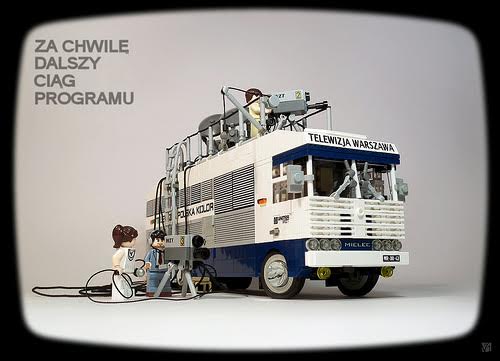
The so-called ‘small’ Act directed at the public media is a short-term regulation to be replaced in June 2016 by a proper law about ‘Polish National Media’. Yet current modifications allowed wide-ranging moves mostly in the personnel sector. The management boards of both the public television (TVP) and public radio (PR) had to resign and the Ministry of the Treasury nominated new ones, so public television is run now by a politician who openly admits he got the position from the head of the party and public radio has a boss whose experience with this medium is based on listening every day to its morning programme while taking a shower and having breakfast.
A significant number of top Public Sector Media (PSM) journalists have lost their jobs since then. The Journalists Association reports that more than 100 journalists have been fired from public television, some left as protest, and one announced live in his last programme: “I am leaving now, see you in democratic Poland again”. The authorities, however, deny ‘cleansings’ in the Public Service Broadcaster. In their explanation they said on the one hand many contracts had expired and on the other hand some journalists had left voluntarily, accepting proposed agreement conditions. But this is only half of the picture. The situation of the public television – Telewizja Polska (TVP) – has been turbulent since 2011 due to the restructuring measurements undertaken by the former management. Current officials claim the damage was caused by the former government which approved a ‘leasing manoeuvre’. The fact is: TVP staff were reduced from over 4,000 to 2,838 in 2011, and a further 411 were transferred to a private outsourcing company in 2014. The measurements were highly controversial and sparked several lawsuits in which employees tried to prove that the transfers were illegal. Interestingly it didn’t attract a lot of attention in society and in 2014 TVP made, for the first time, a profit of EUR 1,45 million and remained the leading medium in Poland with the highest market share (1).
TVP has been captured by the state and brutally used in a political game. Although by definition it belongs to the public, this awareness is not really widespread in Poland. The difference between the political powers seems to be smaller than it felt in the beginning: the former coalition justified the changes with economic difficulties, choosing neo-liberal solutions to repair the budget, whereas the current one-party government officially wants to promote independence and pluralism through sophisticated personnel politics. Both measures ignored protests from the public. In March 2016 a significant number of journalists who used to be the faces of the Polish Broadcasting Service (PBS) disappeared from the screen, and the main news service in the evening lost almost half a million viewers. The ‘small’ media Act brought a wind of change to the Polish media landscape but according to politicians in June we can expect a ‘hurricane’.
(1) Katharine Sarikakis, 2015, Public- Service Media in Europe: A Quiet Paradigm Shift? In: Journalism at Risk. Threats, challenges and perspectives. Council of Europe Publishing
photo credit: <a href=”http://www.flickr.com/photos/10142787@N06/19712784230″>Jelcz / Mielec / WZT WR-0043 (1971)</a> via <a href=”http://photopin.com”>photopin</a> <a href=”https://creativecommons.org/licenses/by-nc-nd/2.0/”>(license)</a>
 Media Governance and Industries Lab Blog
Leave a comment