By Gentiana Ramadani
Sheena Shirani is a woman who broke the silence and spoke out over sexual harassment towards her. An Iranian newsreader at Press TV posted online a recording of a phone conversation in which a man believed to be her boss, Hamid Reza Emadi, allegedly repeatedly asks her for sexual favours (BBC source).
Subsequently, in Serbia, Bratislav Gasic, minister of defence, was fired because of his insult toward a female journalist from B92 Television who knelt down in front of him to avoid being in the way of cameras as he spoke to a group of reporters during a visit to a factory. He said: “I like these female journalists who kneel down so easily” (DailyMail sources).
It is very important that my and other journalists’ opinions are heard, the struggles that we come across on a daily basis, especially in the field of gender issues and sexual assault against women, especially at the workplace.
It is important to emphasize that speaking about this phenomenon, which is longstanding, still remains a serious problem. It is a problem because the incidents involving women journalists and the pressure in their workplaces have been hidden for a long time. They have been and still are combating situations where in the main cases they are the subject of abuse and sexual assault from their colleagues, or their ‘bosses’.
And I have been asking why women journalists keep such a thing inside and don’t talk to anyone. Is this a cultural stigma? Or lack of faith in the authorities, or fear of losing a job? Or what? Why do women choose to hide this phenomenon? Is it a culture of impunity that ‘dictates’ this behaviour and turns it into a culture of silence? It seems that our freedom to express ourselves is questioned nowadays more than ever.
Well-known journalists were asked about the situation in their countries:
Mirela Milori – Albania
Journalist, news presenter, ABC News

In Albania, sexual harassment of women journalists is not a phenomenon that generates widespread worry. This does not mean that it does not exist. I think it is in the form of pressure or verbal harassment, but anyway, in newsrooms where I worked and environments with which I am in daily contact, I cannot say that I have encountered any kind of sexual harassment at work.
However, that environment that looks so “clean ” is not only the result of male journalists governing the media in the country, but also due to the silence, the mentality I think of women journalists who are not ready to speak up about working environments with situations that can be like that. If sexual harassment happens, I think that may be the same for each female victim of it.
Monika Stafa – Albania
Journalist, news presenter, researcher, Top Channel TV
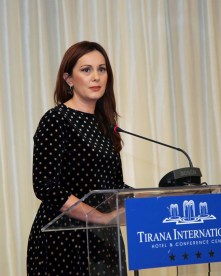
We know of a lot of cases that are not spoken of loudly, and this happens usually between colleagues. The victim does not speak up! But I am pretty sure, almost confident that this doesn’t happen only in the media sector, but in all other sectors as well.
Albania in particular, but even the region in general, does not have clear rules, a strong legal framework and policies related to the protection of women and that of women journalists. The relationship between the owner of the media and journalists doesn’t accommodate socialization and sometimes this ‘gives’ the executives the ‘right’ to ‘break the rules’ and to not fulfill the working agreement, in a moral and professional way.
Shqipe Gjocaj – Kosovo
Reporter, Sbunker, Op-ed

Sexual harassment as a topic and issue is not discussed often, nor is it part of public debates. In general, complaining about sexual harassment in an official manner is not a common practice. It is considered a sensitive issue, and often justified as “typical male behavior”. In a training event on Women, Media and Governance that I participated in last year, a considerable number of both male and female journalists claimed that those who report sexual harassment should also be able to “prove” they had experienced it. I think this says a lot about the “blaming the victim” culture for those who report it and the lack of trust they deal with when they make a complaint. Also, provocative clothing is often considered inappropriate and as justifying the lead-up to sexual harassment.
Masha Durkalic – Bosnia & Herzegovina (BiH)
Freelance journalist

The situation regarding sexual assault and rape when it comes to female journalists in BiH is not so serious as in other countries in the world where women journalists are, because of specific social circumstances, in danger of sexual assault and/or rape. In BiH, the problems are reflected in somewhat different problems that still show the amount of sexism and discrimination towards women journalists. More often than male journalists, women journalists are considered to be not as capable, and are often called out publicly on that, with several examples that happen almost every year that show that. This public “calling out” usually comes from men in power, more specifically, male politicians whom women journalists confront about serious subjects that they are reporting about. That said, these events do present a kind of sexual assault that is not demonstrated physically, but has psychological repercussions for the person who is being verbally assaulted in this way. These episodes remain unpunished, however, as there is no useful mechanism of sanction – the female journalists harassed in this way can only seek help from associations of journalists, and their power is quite limited – there are no practically applicable sanctions, which is the same with, I believe, many such cases in the world, even those more serious, that involve actual sexual assault and/or rape.
What do male journalists in management positions say?
Bledar Zaganjori – Albania
News director, Top Channel TV
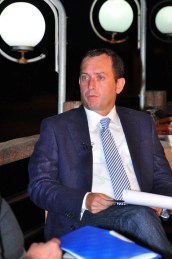
Albania is not immune from this phenomenon, where woman are victims of sexual harassment. I have heard cases in media, cases when young woman journalists have been under pressure, but I know that they did confront the situation with dignity. But there are a lot of cases also of being afraid of losing the job, being afraid of what people say, they did not denounce the case.
In Top Channel, I’m proud to say that there have been strict rules from the beginning. We have an ethical code with rules dedicated to behavior and even the way of dressing. And we are very sensitive about that.
This system has proved effective, and in our 15 years we have not had a case of sexual harassment, at least in my department, which has been led by me since 2010.
Enton Abilekaj – Albania
News director, News24 Television
Sexual harassment is the “silent killer” of professional relations in Albania. Female staff suffer it, but cannot denounce it, due to several reasons. One of the reasons is the dependence on the workplace. The lack of the work market and the control of this market by males make it difficult for women to break the silence. Another reason is the lack of emancipation of society. A denouncing female is still seen with skepticism, as complicit, and risks her reputation and position in society. The third reason is the lack of public opinion and the close connections which favour the abusers, not only in this field, not only in this kind of crime.
Fatos Hakorja – Albania
Editor-in-chief, Klan Television
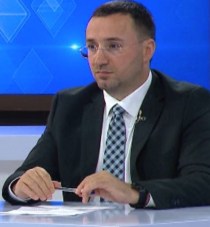
There are only a few reports in Albanian media about the sexual harassment phenomenon in the work environment, public or private. It is a phenomenon, because it exists in such dimensions, according to the data of NGOs for women’s rights protection. But these cases remain hidden, unfortunately, and we do not have denunciations for some reasons – because of women being afraid to lose their job, and even because of the level of society that still remains patriarchal and masculine. Media is not an exception in this phenomenon.
But in my perception cases of sexual assault in the media are decreasing every day, not because the media is not revealing them, but because of a kind of independence and awareness of women journalists. The profession itself gave freedom to women journalists, and the media trade gives them a lot of opportunities to work, and this reduces the chances for them to be victims of sexual intimidation from media bosses.
 Media Governance and Industries Lab Blog
Leave a comment